How Honeycomb Paper Packaging Can Reduce Your Carbon Footprint

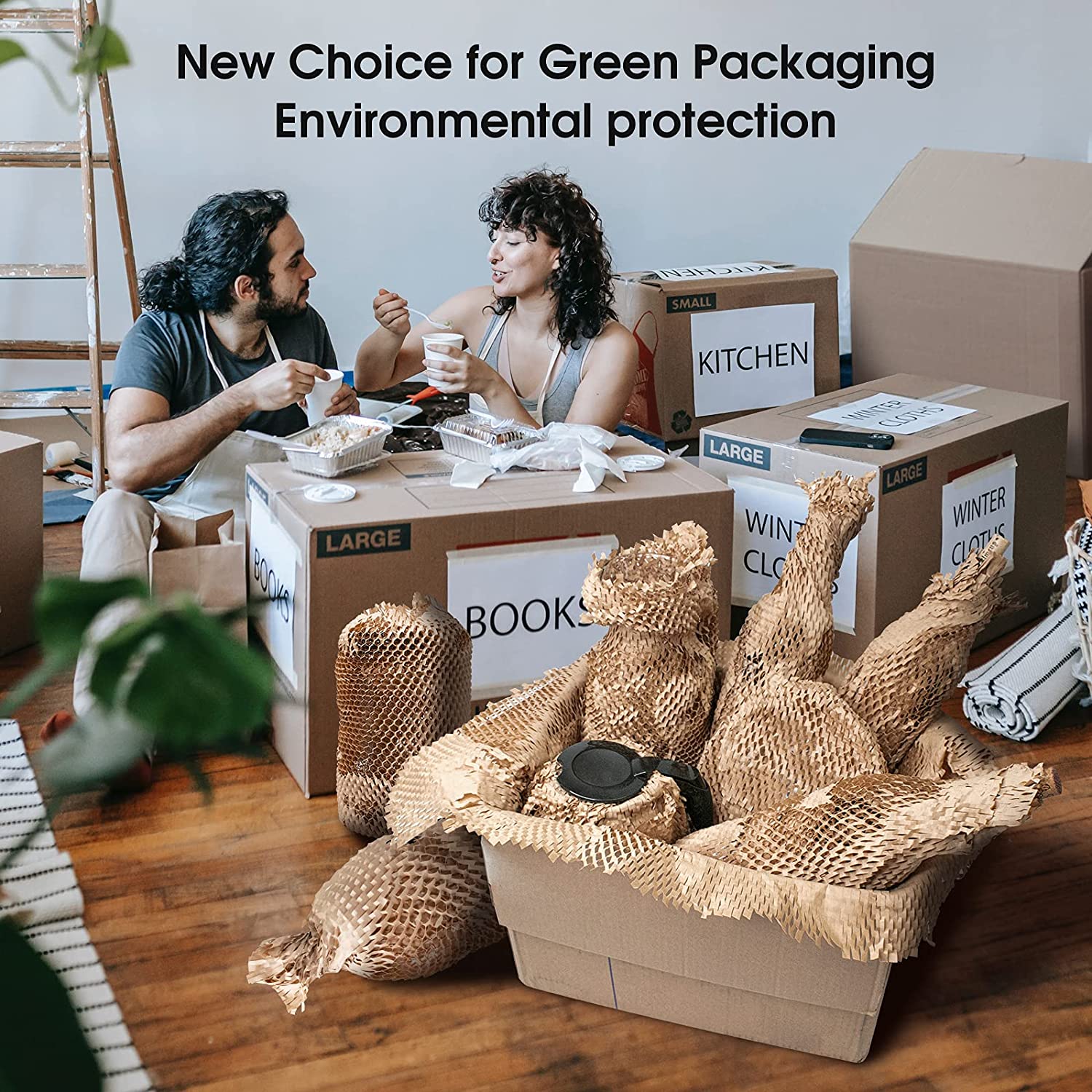
Honeycomb Paper Packaging is grounded in biomimicry, using recycled paper to form a hexagonal pore structure that yields a lightweight, strong, and environmentally friendly material. Its core value lies in significantly reducing carbon emissions to help enterprises achieve their “dual carbon” goals. Here are three key advantages:
1) Raw materials and processes: directly reducing the carbon footprint
- 100% recycled paper base: raw materials come from waste paper recycling. For every 1 tonne of recycled honeycomb paper used, CO₂ emissions are reduced by 11.37 tonnes, while 20 trees are spared.
- Low‑carbon manufacturing: in production, honeycomb paper requires only 3–5% of solid material to achieve the same strength, reducing resource consumption at source by 19. For example, Holwe honeycomb paper production emits 1,004 kg CO₂ per tonne, but due to carbon sequestration effects, net storage is 470 kg CO₂ per tonne.
2) Replacing traditional materials: amplified emissions reductions
- Replacing plastic foam: when 1 tonne of honeycomb paper replaces EPS foam, plastic production emits 7.36 tonnes CO₂, so honeycomb paper reduces emissions by 9.35 tonnes, giving a total reduction of 16.71 tonnes CO₂ and eliminating white pollution.
- Replacing wood packaging: in furniture and building materials, 1 tonne of honeycomb paper can save 30–50 m³ of wood, reducing carbon by 35 tonnes; cold‑chain honeycomb boxes have a carbon footprint of only 1.511 kg CO₂e per kg, marking a reduction of 3,011 kg per tonne compared with traditional foam boxes.
3) Full life cycle green circularity
- Recyclable and degradable: waste can be 100% recycled or naturally biodegraded.
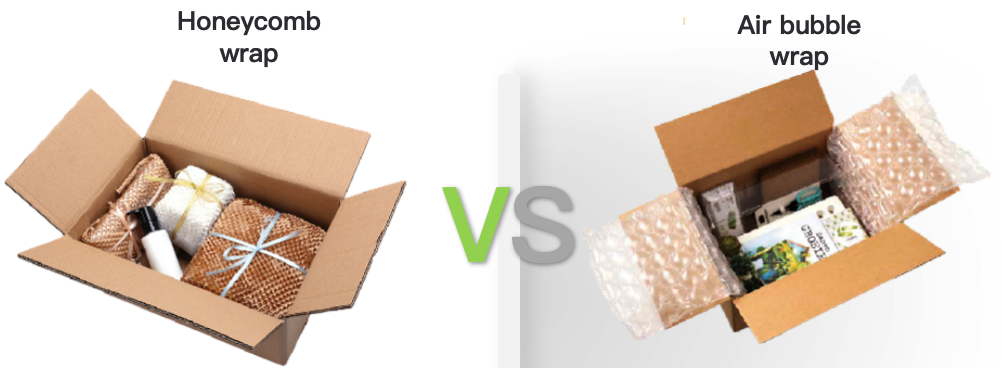
- Transport and storage optimisation: the lightweight design reduces transport energy consumption (30% lighter than corrugated board), and roll‑form honeycomb Packing Paper occupies only 1/8 the volume of bubble wrap, boosting logistics efficiency by 410%.
Industry applications and policy dividends
From Haier's "paper for plastic", packaging and Procter & Gamble's global launch of paper‑based flexible honeycomb packaging Versafill, to fresh‑produce cold‑chain boxes, honeycomb paper has penetrated multiple sectors. Driven by plastic restriction policies and carbon trading, the market potential is around USD0.21 trillion, with an expected five‑year penetration rate exceeding 20%.
From Haier's "paper for plastic", packaging and Procter & Gamble's global launch of paper‑based flexible honeycomb packaging Versafill, to fresh‑produce cold‑chain boxes, honeycomb paper has penetrated multiple sectors. Driven by plastic restriction policies and carbon trading, the market potential is around USD0.21 trillion, with an expected five‑year penetration rate exceeding 20%.
Conclusion: The honeycomb structure embodies natural wisdom; a small sheet of paper can yield substantial carbon reductions. Choosing honeycomb packaging is a win‑win for businesses, cutting costs, increasing efficiency, and fulfilling carbon neutrality commitments.
The Sweet Science of Honeycomb Packaging: Exploring the Advantages of Honeycomb Paper
From Art to Function: The Diverse Applications of Honeycomb Paper